
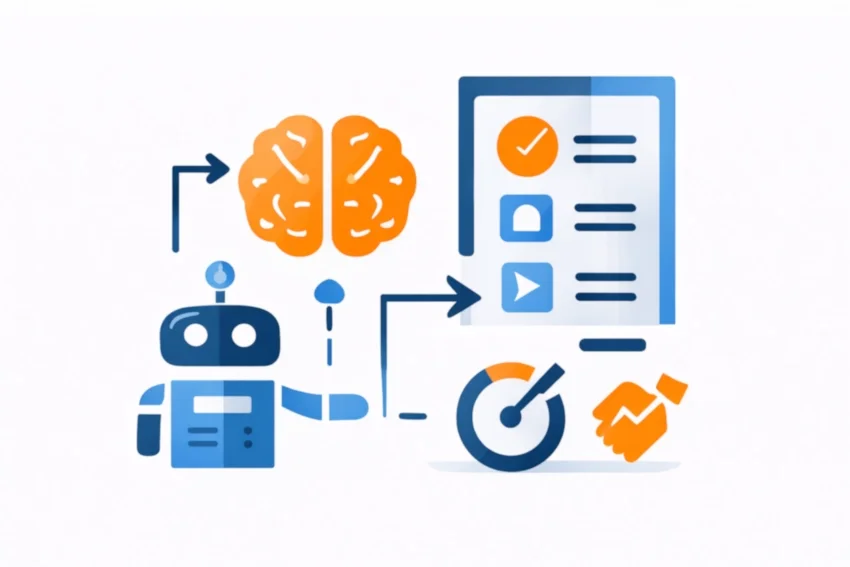
Organizations today operate in an environment shaped by data, speed, and continuous innovation. Decisions are increasingly driven by real-time insights rather than intuition, and competitive advantage depends on how effectively businesses can turn data into action. In this context, business automation is evolving from a productivity tool into a strategic foundation for modern enterprises.
The next phase of automation is being shaped by artificial intelligence. AI automation for business enables systems to analyze data, learn from outcomes, and execute intelligent actions at scale. This shift is transforming business models, workflows, and how organizations compete in data-driven markets.
This article examines the future of business automation and explores how AI-driven automation will define the next generation of data-driven organizations.
The Evolution of Business Automation
From Manual Processes to Intelligent Systems
Business automation began as a way to reduce manual effort by automating repetitive tasks. Early automation focused on rule-based workflows and predefined logic. While effective, these systems lacked flexibility and adaptability.
Today, automation is becoming intelligent. AI-powered systems analyze data patterns, adapt to changing conditions, and optimize processes continuously. This evolution is redefining what business automation means in a data-driven world.
The Role of Data in Automation
Data is the fuel that powers modern automation. As organizations collect more structured and unstructured data, automation systems gain the context needed to make smarter decisions.
Future business automation will rely heavily on data quality, integration, and real-time access to drive intelligent actions.
AI Automation for Business as a Strategic Capability
Moving Beyond Efficiency Gains
Traditional automation focused on efficiency and cost reduction. While these benefits remain important, the future of automation is about strategic value.
AI automation for business supports:
- Faster decision-making
- Predictive insights
- Adaptive workflows
- Continuous optimization
This transforms automation into a core business capability rather than a support function.
Intelligent Decision Making at Scale
AI-driven automation enables organizations to process vast amounts of data and make decisions consistently across operations. Automated decision systems reduce delays and improve accuracy, allowing businesses to act quickly in dynamic environments.
This capability will become essential as data volumes and complexity continue to grow.
How Automation Will Shape Future Business Models
Automation-Driven Business Models
Future business models will increasingly be built around automation. Organizations will design services and operations with automation at the core, enabling scalability and flexibility from the outset.
Automation-driven models reduce dependency on manual intervention, allowing businesses to scale faster and enter new markets more efficiently.
Data as a Competitive Asset
Organizations that effectively combine business automation with data intelligence will gain a competitive edge. AI-powered automation turns data into actionable insights, enabling faster innovation and better customer experiences.
In the future, the ability to automate data-driven decisions will differentiate market leaders from followers.
The Future of Workflows in Data Driven Organizations
Adaptive and Self-Optimizing Workflows
Future workflows will no longer be static. AI automation will enable workflows that adapt based on performance data, demand changes, and business priorities.
Self-optimizing workflows will continuously improve efficiency and outcomes without manual intervention.
Cross-System and Cross-Department Automation
Automation will increasingly span multiple systems and departments. Integrated automation ecosystems will eliminate silos and ensure seamless data flow across the organization.
This level of integration will support faster collaboration and greater operational clarity.
Enhancing Accuracy, Consistency, and Governance
Reducing Errors Through Intelligent Automation
As automation becomes more intelligent, error rates will continue to decline. AI automation detects anomalies, validates data, and enforces business rules consistently.
This ensures accuracy and reliability across high-volume processes.
Strengthening Compliance and Accountability
Future automation systems will embed compliance directly into workflows. Automated controls, audit trails, and monitoring will improve governance while reducing administrative burden.
This will be especially important in regulated and data-sensitive industries.
AI Automation and the Customer Experience of the Future
Personalization at Scale
AI-driven automation will enable hyper-personalized customer experiences. Automated systems will analyze customer behavior and preferences to deliver tailored interactions in real time.
Personalization will no longer be limited by scale, allowing organizations to maintain strong relationships as they grow.
Proactive Customer Engagement
Future automation systems will anticipate customer needs and trigger proactive engagement. This shift from reactive to proactive service will improve satisfaction and loyalty.
The Role of Human Expertise in an Automated Future
Collaboration Between Humans and AI
The future of business automation is not about replacing people. It is about collaboration. AI automation handles data-intensive and repetitive tasks, while humans focus on strategy, creativity, and leadership.
This partnership enhances productivity and job satisfaction.
Building Trust in Automated Systems
As automation becomes more autonomous, trust will be critical. Transparent and explainable AI systems will help organizations understand and manage automated decisions.
Trustworthy automation will accelerate adoption and long-term success.
Competitive Advantages Enabled by Automation
Speed and Agility
Organizations with advanced business automation can respond faster to market changes. Automated decision-making and adaptive workflows enable rapid execution and innovation.
Scalability Without Complexity
Automation allows businesses to scale operations without proportional increases in cost or complexity. AI automation ensures systems remain efficient as workloads grow.
Continuous Improvement
AI-powered automation learns from outcomes and improves over time. This continuous improvement cycle creates long-term operational excellence and resilience.
Preparing for the Future of Business Automation
Investing in Data and Integration
The success of future automation depends on data quality and system integration. Organizations must invest in unified data platforms and interoperable systems.
Developing an Automation-First Mindset
Data-driven organizations will adopt an automation-first approach to process design. This mindset ensures automation is embedded into operations rather than added later.
Conclusion
The future of business automation lies at the intersection of data, intelligence, and adaptability. As organizations become more data-driven, business automation will evolve into a strategic foundation for growth and competitiveness. AI automation for business will shape future business models, workflows, and decision-making by enabling intelligent, adaptive, and scalable operations. Organizations that embrace this transformation will gain lasting advantages in speed, accuracy, and innovation. In a data-driven world, the future belongs to businesses that automate intelligently, act decisively, and continuously evolve.


